
Believe in boycotts but not veganism? Pick a lane
We need to talk about the strange exception people make for animal exploitation

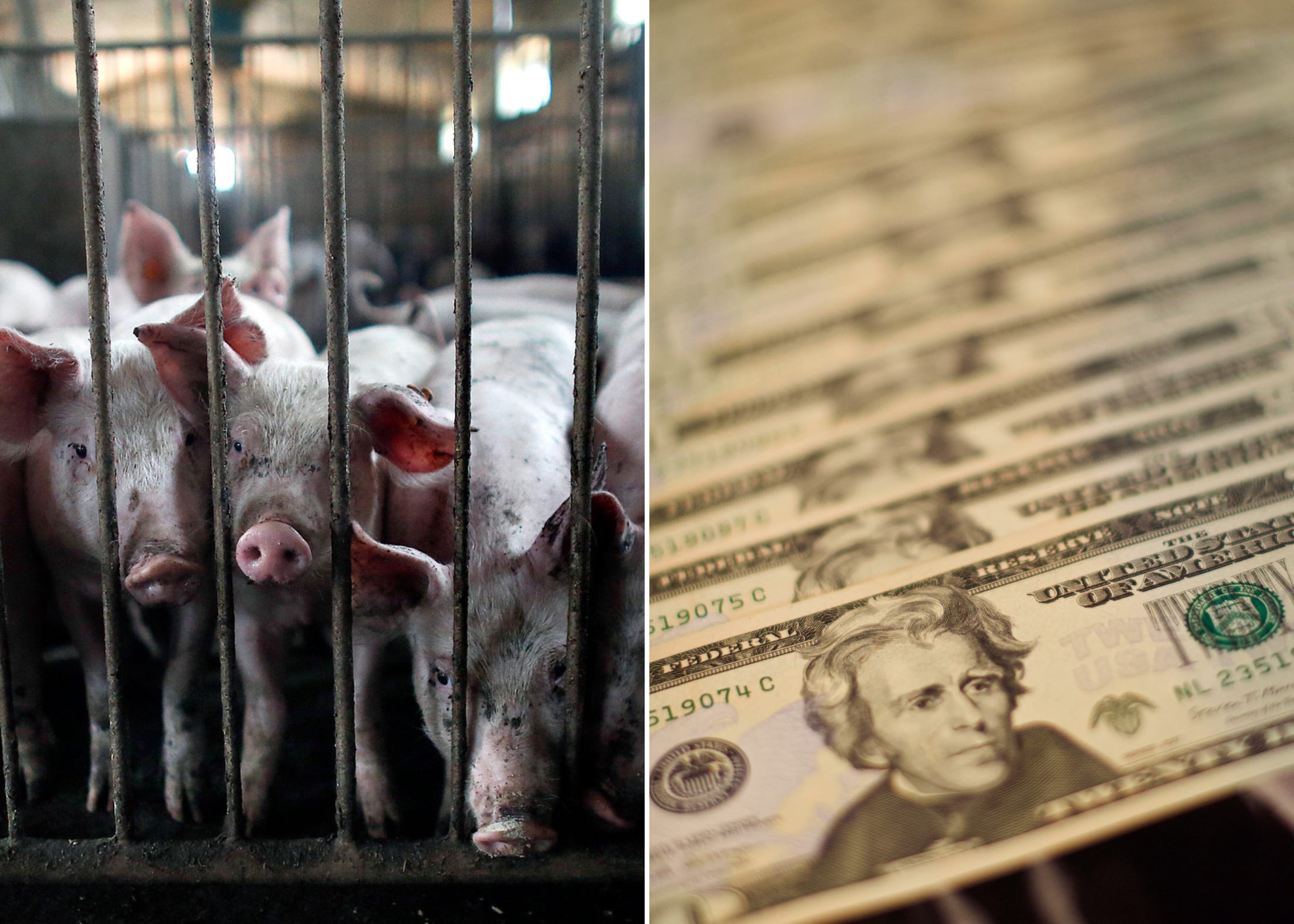
There’s a bizarre contradiction at the heart of how people talk about veganism — and to understand it, we need to take a closer look at how we usually think about boycotts. 👇
We love a good boycott
There is something undeniably electric about watching a massive corporation buckle under the weight of a collective “no.”
When Jimmy Kimmel was pulled off air under political pressure, the backlash was immediate. People canceled subscriptions, advertisers panicked, and suddenly — miraculously — the show was back. Late-night hosts openly credited the people who boycotted Disney with forcing that reversal.
Or look at Tesla and X, both of which suffered major commercial damage — from falling sales and advertiser boycotts to declining brand trust — after Elon Musk’s open attacks on American democracy. The supermarket chain Target saw billions wiped off its valuation during boycott campaigns following its rollback of DEI initiatives.
There is a tremendous public willingness to participate in these actions. 2.5 million users stopped using ChatGPT over OpenAI’s controversial deal with Trump’s “Department of War,” handing rival Anthropic not only the top spot on the Apple App Store but also the title of the world’s most valuable AI startup.
Both recent and historical examples already show that boycotts can have an overwhelming impact — and have helped achieve some of the most important social and political advances.
Boycotts have led to the end of state-sanctioned systems of discrimination and segregation. The boycott of slave-produced products contributed to the abolition of slavery. Strategic boycotts of South African products helped end apartheit in South Africa.
It is entirely conceivable that some of these systems would still exist today without private individuals standing up for what they believed in and channeling that conviction into determined boycotts.
Companies pivot, executives panic, laws change — all because enough people decided to withdraw their money.
We know this works.
We cheer when it works.
And yet…
Here’s what I find fascinating: the moment veganism enters the conversation, the script flips.
“I can’t change anything.”
“My individual choice doesn’t matter.”
“It’s too small to have an impact.”
Really?
Because what is veganism, structurally, if not a boycott?
A boycott of industries built on animal exploitation. A refusal to fund a system of needless cruelty. A withdrawal of demand.
The exact same mechanism.
The exact same logic — just applied consistently, every day, instead of episodically when a scandal trends.
Someone will object at this point: “Veganism is a niche concern — it doesn't have the potential for a mass boycott.”
But think about what that claim actually reveals. Not a rebuttal — just a confession of how little the person has looked into it.
Veganism already is a mass boycott. A remarkably effective one. In terms of global participation, the refusal to use animal products may well be the largest boycott in recorded history.
Veganism is also simply the values already held by the overwhelming majority of society put into action. Just applied without arbitrary exceptions. The “niche concern” label is more convenient than it is accurate.
Animal exploitation and cruelty are things many people still pay for — but not things many people actually stand behind. Many can’t even bring themselves to look at what they’re funding.
Add in the staggering environmental and health consequences of animal farming, and the case stops being philosophical and becomes almost mundane.
Veganism isn’t just a plausible candidate for one of the most justified boycotts of our time. The case for it is about as clear-cut as it gets:
The stakes couldn’t be higher. This isn’t a boycott over a brand’s PR scandal. This is about the greatest source of preventable animal suffering on the planet — which also happens to be one of the most pressing existential threats humanity faces, from pandemics and antibiotic resistance to biodiversity loss and climate breakdown.
You don’t lose — you win. Unlike most boycotts that demand sacrifice, this one tends to pay you back. A plant-based lifestyle is significantly cheaper, and many people report meaningful improvements in their health. It’s one of the rare forms of collective action where opting out personally costs you far less than participating immediately gains you.
It’s backed by the values of the majority. As mentioned above, this isn’t a fringe position. The principles veganism acts on — that unnecessary cruelty is wrong — are already held by most people. Veganism simply means living those values honestly.
You’re joining a movement, not starting one. Tens of millions of vegans worldwide have already spent decades shifting supermarket shelves, product ranges, and public awareness. A thriving global ecosystem of activism, innovation, and community has been built — and it’s ready to support you from day one.
The wind is at your back. Economic, demographic, and technological shifts — from the rise of Gen Z to breakthroughs in alternative proteins — are set to amplify what’s already one of the most sustained and well-networked boycott movements in human history. The question isn’t whether this is going anywhere. It’s whether you add your weight to it.
Every time you purchase something, you fund something.
Every time you eat, you vote.
It’s time to be clear with all the boycott enthusiasts around us: if boycotts work, veganism works.
Final thoughts
The impact of a boycott goes far beyond economics. Alongside the financial pressure they build, boycotts show solidarity, sustain stories in the public eye, provide visible evidence of opposition, and bring new people into a cause. They create outsized impact with minimal resources. In short, they are one of the most powerful tools available to us in the fight for a kinder world and a livable future.
And they are available to everyone. No protest permit required.
History shows what they can achieve. Boycotts have already brought down systems of oppression and industries once considered untouchable, including wild animal circuses, orca shows, and fur.
The largest system of animal exploitation on the planet is next. It’s already happening. We can all be part of accelerating it.

Thank you for reading!
If you’d like to support this project and help it grow, please consider joining as a free or paid subscriber. Sharing my articles and recommending this newsletter also helps tremendously, as I rely on word of mouth to reach more people.
Thank you for stopping by. 💛
and what is animal exploitation other than fascism projected and implemented onto other species.
It always seems ludicrous to me to people are afraid of people who don’t eat meat. Boo!